
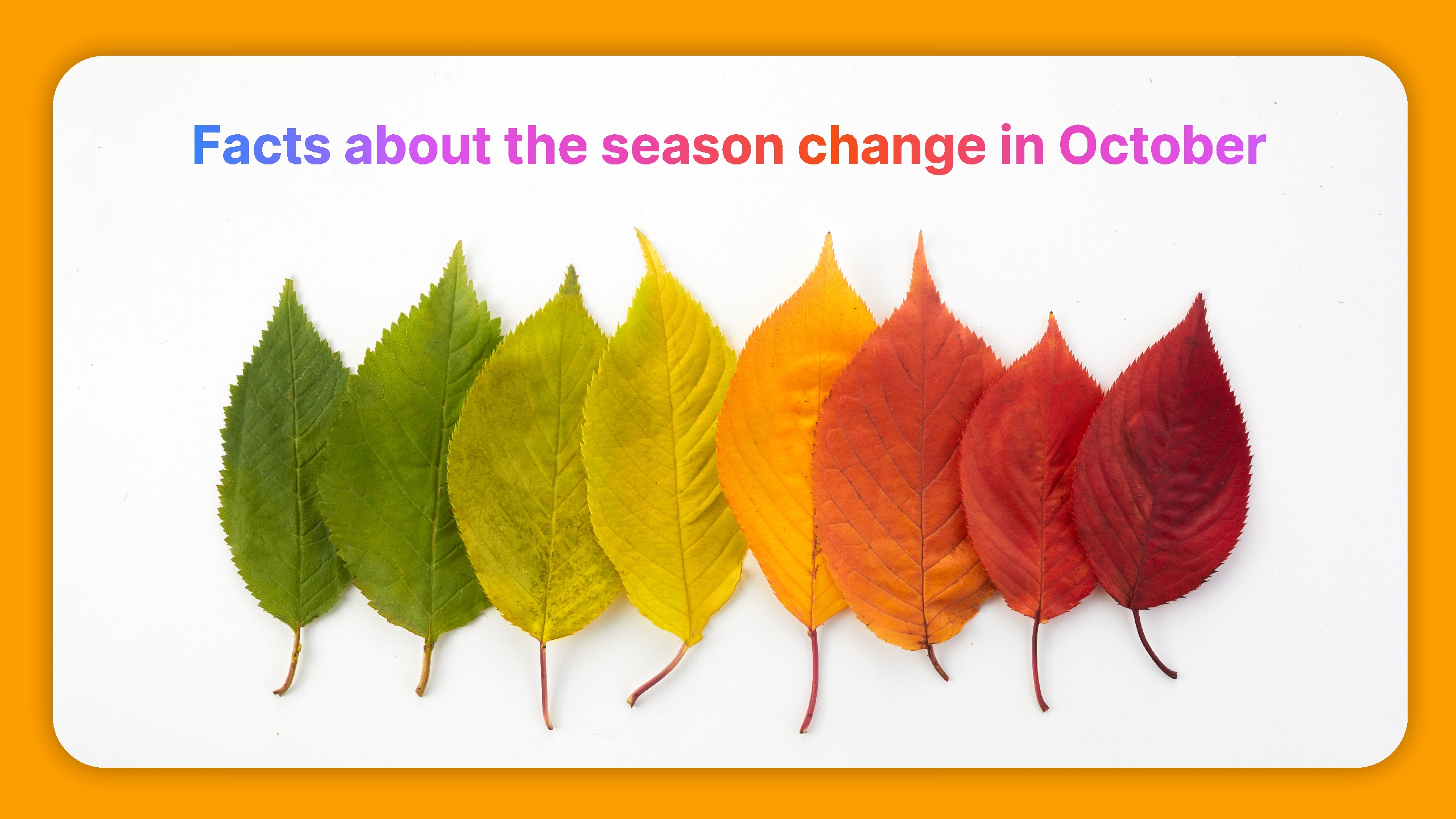
October marks a fascinating transition in nature and climate, and explaining this shift to children can help them understand seasonal change, earth science and their own rhythms. As the southwest monsoon retreats and the northeast monsoon begins in parts of India, the country gradually ushers in the winter season. The air turns cooler, humidity drops and subtle transformations unfold in the skies, soil and environment.
Here are six key facts about this seasonal shift that reflect how nature adapts during this time of the year.
1. The Sun’s path begins to shift
During October, as the Earth continues its orbit around the Sun, the northern hemisphere tilts slightly away from it, making the Sun appear lower in the sky and decreasing the solar angle. This reduction in solar angle gradually shortens daylight hours, which is one of the primary causes of the cooling that follows. Educational studies highlight how variations in sunlight and intensity influence temperature, plant growth and animal behaviour.
2. Daylight hours grow shorter
Following the autumnal equinox (the time of year when the Earth’s tilt causes the Sun to appear directly above the celestial equator, resulting in nearly equal day and night and marking the beginning of autumn) in late September, daylight begins to diminish steadily through October. In India, this affects everything from early morning routines to outdoor activities. The shorter days influence not only human schedules but also photosynthesis and flowering patterns in plants, reflecting nature’s rhythm of preparation for winter.
3. Leaves change colour due to light and not due to cold
While often associated with falling temperatures, it is actually reduced daylight that triggers the colour transformation in leaves. As chlorophyll production decreases, other pigments such as carotenoids and anthocyanins become visible, creating shades of yellow, orange and red. This phenomenon demonstrates the intricate link between light cycles and plant biology.
4. Weather patterns and wind systems change
As land surfaces cool faster than the sea, air pressure systems shift, altering wind and precipitation patterns. In India, this marks the onset of the northeast monsoon in parts of the south and east. Meteorological reports suggest that Octobers have become warmer and more variable in recent years due to climate change.
5. Wildlife begins its own transition
Seasonal change affects ecosystems as birds begin migrating and animals adjust their feeding and breeding cycles. Many migratory species use India’s wetlands and coasts as stopovers during this period. Observing such movements offers valuable insights into ecology, biodiversity and the interconnectedness of life across regions.
6. The season affects human health and rhythms
Changes in temperature and daylight can influence human circadian rhythms, sleep patterns and mood. Research has shown that human-induced climate change is also altering the timing and duration of natural seasons. Understanding these transitions helps align lifestyle habits with environmental cycles, promoting overall well-being.
The season change in October serves as a living lesson in adaptation, balance and interconnection. Helping children observe and understand these natural shifts deepens their appreciation of science and the world around them. At Narayana Schools, education extends beyond textbooks to nurture awareness, curiosity and harmony with nature. As children observe October’s seasonal transformation, from shifting sunlight and falling leaves to the onset of cooler winds, they learn that change is a natural rhythm of growth. At Narayana Schools, we help students embrace every phase of learning with confidence and wonder, as it helps them move closer to their goals and ultimately realise their dreams, because your dreams are our dreams.
This information was so nice and gave some knowledge to me thanks to narayana team about sending this such a beautiful information about early winter coming.
I love Narayana School so much. ❤️
very good
excellent
yes
Excellent
Very good
yes
Thank you for usefull information
The way the Earth’s tilt affects sunlight and temperature during October is such a great learning point, especially for kids. It’s a perfect time to observe how nature adapts to the changing seasons, from the skies to the soil.
Nice information.
This fact is amazing g